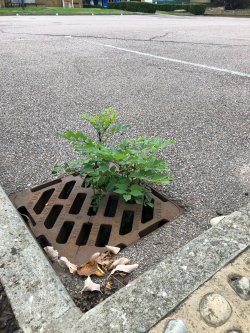
Urban weed control
AERU have extended their expertise in agricultural crop protection into the topic of urban weed management. This has included two projects (see below) working with local authorities to reduce the environmental impact of urban weed control methods.
2020-2020: Environmental Impact Assessment of current urban weed control methods
An Environmental Impact Assessment (EIA) of key control strategies currently used in urban weed management will be undertaken by UH as part of a wider project for North Lanarkshire Council. A life-cycle assessment approach will derive outputs to include energy, greenhouse gas emissions, eutrophication, acidification, and terrestrial and aquatic ecotoxicity. The EIA will enable the comparison of current approaches to weed control in urban areas and inform potential future weed control strategies.
2010-2015: Sustainable urban weed management
This is a 5-year Defra funded research project undertaken in collaboration with East Malling Research, Kent County Council, Jacobs (as Kent Highway Services) and the Environment Agency to develop sustainable methods of controlling weeds in urban situations. Currently the vast majority of pesticides used by local authorities are herbicides and, of the total used, 9% is applied to roads and 34% to other hard surfaces. The UK is poorly positioned to reduce the use of pesticides in these situations and adopt more sustainable methods of control such as thermal and mechanical techniques. This contrasts with the situation in Denmark, Sweden, the Netherlands and Germany where a strong public and political interest for reducing the use of herbicides to control weeds in urban amenity areas exists and very strict regulations and/or bans are imposed. This project will seek to investigate the sustainability of alternative weed control methods. It will assess their effectiveness and undertake an economic and environmental cost benefit analysis to compare performance with each other and with the current herbicide approach.
Publications
- Warner, D.J., Davies, M., Hipps, N., Tzilivakis, J., Lewis, K.A. and Fountain, M. (2026) Integrated weed management reduces the environmental impact of urban amenity weed control. Weed Science. In press.
- Fountain, M., Davies, M., Mounter, D., Hookey, J., Mason, A., Lewis, K.A. and Warner, D.J. (2015) Development of zero and minimal herbicide regimes for controlling weeds on hard surfaces and determining their emissions. Final report for project PS2802. Defra, London.
- Fountain, M., Davies, M., Mounter, D., Hookey, J., Mason, A., Lewis, K.A. and Warner, D.J. (2015) Best Practice Guidance Notes for Integrated and Non-chemical Amenity Hard Surface Weed Control.
- Fountain, M., Hookey, J., Mounter, D. & Warner, D.J. (2014). Development of zero and minimal herbicide regimes for controlling weeds on hard surfaces and determining their emissions and effectiveness and comparisons with more traditional approaches. Towards Developing Guidance Notes for Integrated Approaches to Amenity Weed Control. 11 February 2014 University of Hertfordshire and 25 February 2014, University of Lancaster
- Warner, D.J. (2013). Development of low/no herbicide regimes for amenity weed control. Waitrose Technical Conference, Waitrose, Allington, Kent, 12th November 2013.
Contact
Links






Visit Kent County Council's weed control web page.
